Creation
The Moon Foundry — A Guide to Fusing Cards
How the Moon Foundry works in Moonfall — fuse two cards into a new one, discover recipes, and forge cards of your own.
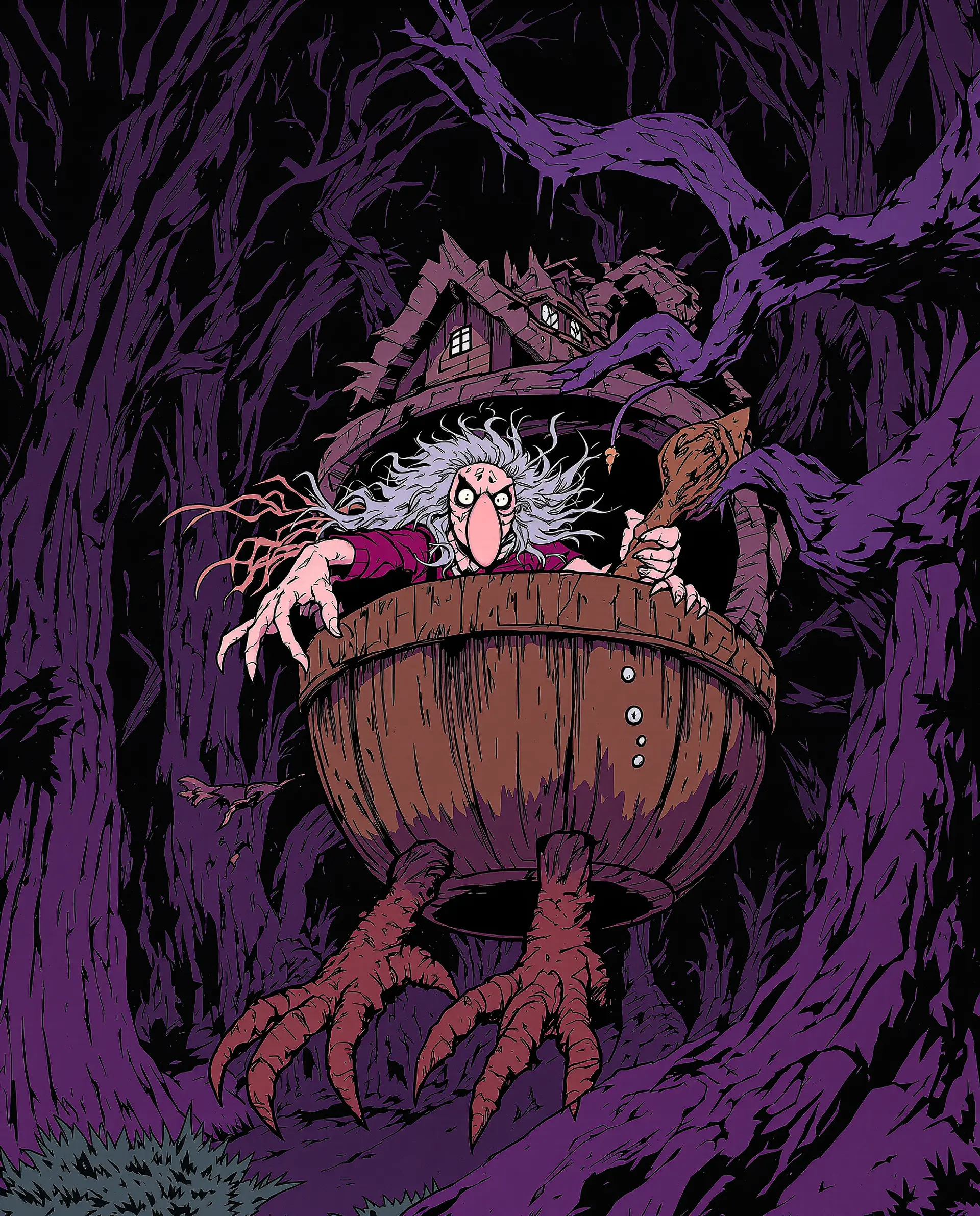
Most card games hand you a fixed set of cards and ask you to build the best deck from them. Moonfall does that too — and then hands you the forge. The Moon Foundry is where you stop collecting other people's cards and start making your own. Drag two cards together, and an AI card designer fuses them into a single, brand-new creature: new name, new art, new cost, native to the game. This guide explains how fusing works, what "discovery" means, and how to forge cards worth keeping.
What the Foundry is
The Foundry is Moonfall's creation workshop, opened through the Moon Fuse tool. You choose two parent cards from your collection and combine them. Behind the scenes, an AI designer considers both parents and designs a new Character card meant to sit fairly alongside everything already in the game. (The Foundry only makes characters — you can't forge new spells.)
Crucially, fusion is not additive. The result is not "both abilities glued together." The designer performs a kind of semantic compression: it collapses the pair into one clear idea and gives the new card a single, balanced ability — the most intuitive thing that pair suggests.
How Moon Fuse recipes read
The best way to understand Moon Fuse is to look at actual recipes. These are public Foundry pairings from Moonfall's current fuse loop:
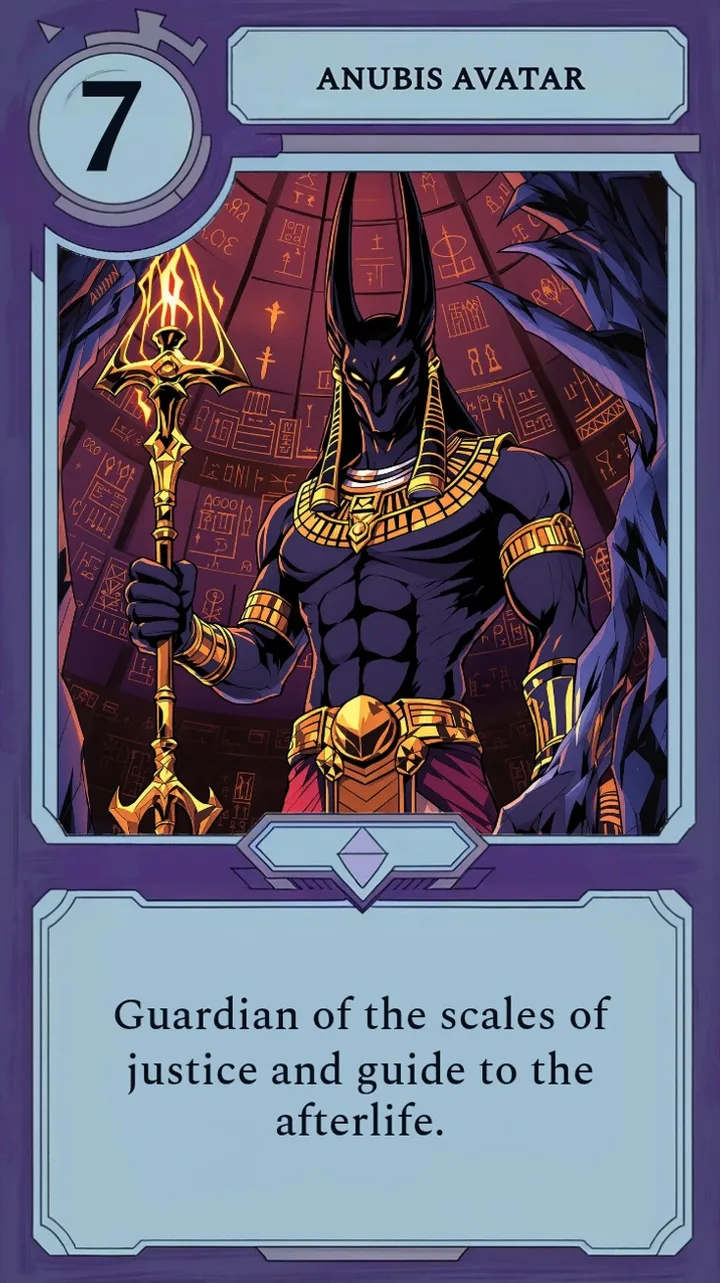
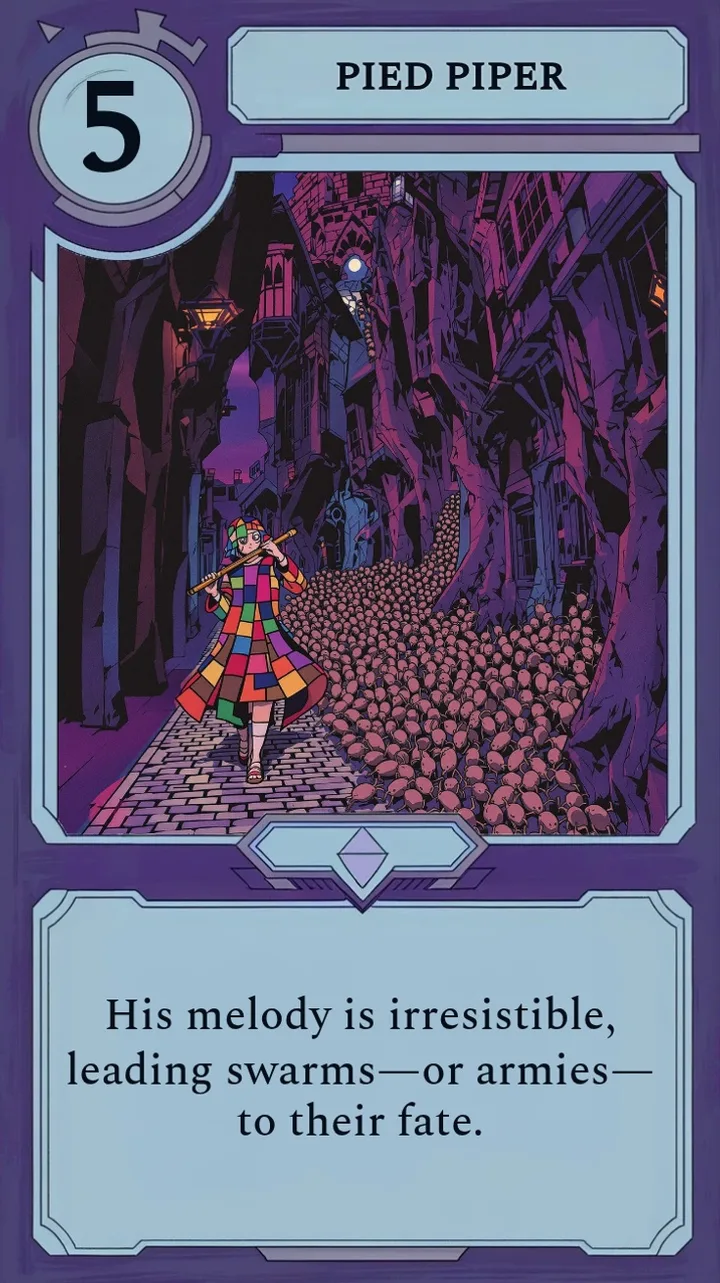
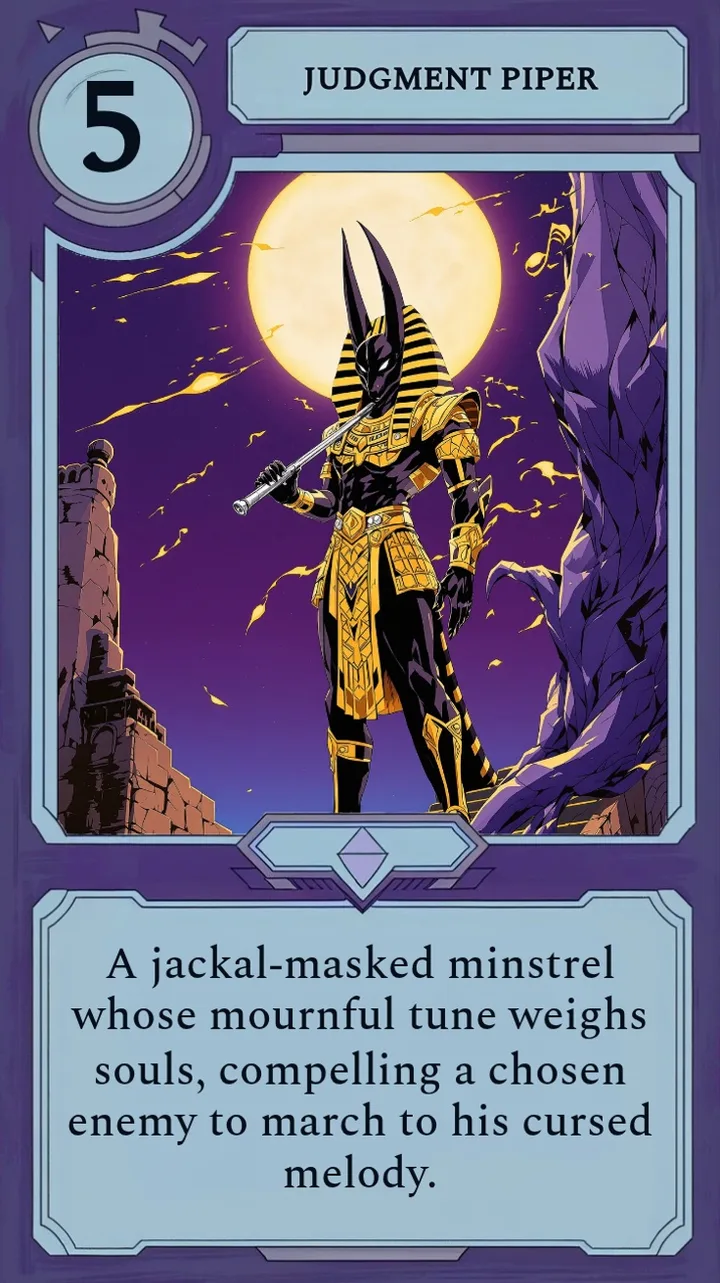
- Anubis Avatar + Pied Piper → Judgment Piper — judgment and afterlife ritual meet the piper's pull; the result feels like a figure who can call a crowd toward its sentence.
- Emberling + Fluffy Rabbit → Ember Hare — small fire plus a harmless nervous creature becomes a quick little animal with warmth and momentum.
- Corruption Spreader + Lightbringer → Radiant Blight — decay and illumination do not cancel out; they become a bright sickness, something holy-looking and wrong.
- Earthshaker + Tempest Master → Quakestorm — ground force and weather control compress into one disaster instead of two separate powers.
- Stormbringer + Worldtree Guardian → Stormroot — a violent storm tied to an ancient tree becomes rooted weather: power that feels alive, old, and anchored.
Notice the pattern. The Foundry is not trying to make "both parents, but stronger." It looks for the idea between the parents and commits to that. Sometimes the recipe is literal, like Quakestorm. Sometimes it is stranger, like Radiant Blight, where the interesting part is the contradiction. The useful test is whether the result feels readable after you know the parents: of course those two would make that.
What you get
When a fusion resolves, the new card arrives with everything a real card needs: a name, an emoji, a short evocative description written like lore rather than a rules tooltip, a mana cost chosen to fit the concept (not inherited from the parents), and freshly generated art. You're offered a set of art renders and you pick one to finalize the card — and that choice sticks with the card, so choose the one that feels right.
Because playing a Moonfall card is a prompt, the description is deliberately suggestive. A good forged card doesn't explain its ability; it makes you wonder how to use it, and lets the AI Game Master decide the rest at the table.
Discovery: being first
Every fusion corresponds to a recipe — the specific pair of parents that produces a given result. The first time anyone forges that pair, they discover the recipe. Discovery matters for a few reasons:
- It reveals the parents of that result card in your collection. Until a recipe is discovered, a Foundry card keeps its lineage hidden.
- Foundry cards can show a "first discovered by" credit — a small, permanent mark of who brought that card into the world.
- Discovery is not recursive. Discovering a card reveals its parents, but not the recipes of those parents in turn. Each layer is its own small mystery to uncover.
You can also come by a recipe without forging it yourself: if you obtain a Foundry result card another way — winning it, buying it on the Moon Exchange, or crafting a copy — that card's recipe discovery may be credited to you as well.
What makes a discovered card special
A discovered card is one no recipe has produced for you before — a creature that didn't exist until you made it. Once it's yours, it behaves like any other card, only with more history:
- It joins your collection and can be played in matches like anything else.
- You can craft copies of a known recipe cheaply, so a card you love isn't a one-off.
- You can trade it on the Moon Exchange, sending your creation out into other players' decks.
- You can promote a favorite into an animated Stellar card — a living version that moves and speaks.
Tips for better fusions
- Aim for a relationship, not a pile. Parents with a clear connection (predator and prey, cause and effect, element and aftermath) tend to give the Foundry more to work with than two unrelated cards.
- Lean into evocative parents. The more vivid each parent's concept, the more there is to draw on.
- Don't chase raw power. The designer deliberately avoids power creep and keeps one ability per card, so the interesting results are characterful, not just strong.
- Forge for high cost when you want flexibility. Expensive characters get the Game Master's tactical intent step in play, so a costly forged creature can be designed as deliberately versatile.
The Foundry is where Moonfall stops being a game you play and becomes a game you author. Two cards, one new idea, and something you shaped yourself. Generated results can be incomplete, similar to existing material, or otherwise imperfect. The resulting Service content and permitted uses are governed by the current interface and Terms. Ready to make something? Open Moonfall and start fusing — or first read what makes this an AI card game in the first place.
Frequently asked questions
What is the Moon Foundry in Moonfall?
The Moon Foundry is Moonfall's creation workshop. You drag two cards together and an AI card designer fuses them into a single brand-new Character card, complete with a new name, description, mana cost, and generated art. It is how the game's card pool keeps growing.
How does fusing cards work?
You pick two parent cards and combine them with Moon Fuse. The AI reads both parents as one concept and designs a new card that captures the most intuitive result of the pair — not both abilities stacked together, but a single, balanced new idea. You then choose from four art options to finalize it.
What is a recipe discovery?
A recipe is the specific pair of parent cards that produces a given result. The first time anyone fuses that pair, they discover the recipe. Discovering a recipe reveals the result card's parents in your collection and can credit you as its first discoverer.
What makes a discovered card special?
A freshly discovered card is one no one had made before. It carries its own art and identity, it enters your collection, and Foundry cards can show who first discovered them. You can craft copies, trade discovered cards on the Moon Exchange, or turn one into an animated Stellar card.
Can I fuse spells or only creatures?
The Foundry only creates Character cards — you cannot forge new spells. You can use characters as the parents, and the result is a new character intended to sit alongside the existing pool.