The category, explained
Every Kind of Digital Card Game, and Where Moonfall Fits
Online collectible card games, digital trading card games, deckbuilders and story card games: the well-known digital card games of each kind, and where Moonfall fits.
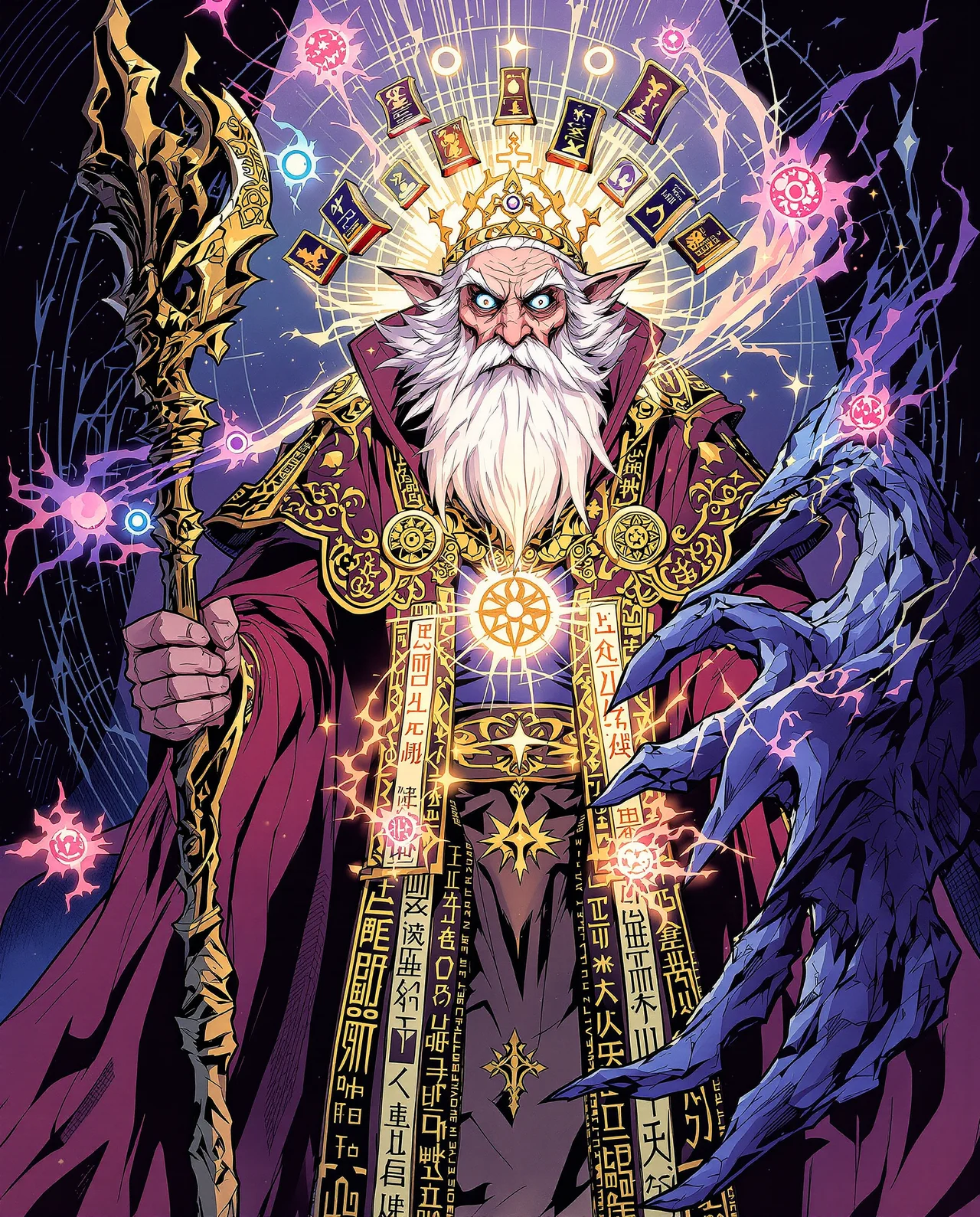
Digital card games come in a few broad kinds: online collectible card games, digital editions of trading card games, deckbuilders and roguelikes, and card games that tell stories. Below are well-known games of each kind, one line each, and then where Moonfall fits. Moonfall is an online card game in which an AI Game Master decides what each play does, and in which players add new cards by fusing two.
None of these lists is a ranking. Each line gives who makes the game, where you play it and one plain fact about it, as checked on 22 October 2026.
Online collectible card games
You build decks from a collection of cards and play matches against other people online.
- Hearthstone, by Blizzard Entertainment, on PC, phones and tablets: spells, minions and heroes from the Warcraft universe, with modes that include Battlegrounds.
- MARVEL SNAP, by Second Dinner, on PC and phones: a collectible card game with characters from the Marvel multiverse, built around short matches.
- Shadowverse: Worlds Beyond, by Cygames, on PC and phones: one-on-one online card battles, and a space called Shadowverse Park for meeting other players.
- Legends of Runeterra, by Riot Games, on PC and phones: a strategy card game with champions from the League of Legends universe, with ranked play and a single-player roguelite mode, Path of Champions.
- GWENT: The Witcher Card Game, by CD PROJEKT RED, on PC, iOS and Android: development ended with a final content update in October 2023, which handed balance changes to a player vote, the Balance Council.
- Gods Unchained, by Immutable, on PC, Mac and phones: a collectible card game in which you collect and trade cards, with a new set released in October 2026.
- KARDS, by 1939 Games, on PC and phones: a collectible card game set in the Second World War, in which your deck is built around one of the war's major powers.
- Eternal Card Game, by Dire Wolf Digital, on PC, Mac, Xbox, Nintendo Switch and phones: a collectible card game in which you build decks by freely mixing cards, with a new chapter released in October 2026.
Next to Moonfall. Moonfall is an online collectible card game too: you build decks from your Collection and play other people or the AI. The difference is in the cards. A Moonfall card has a name, a mana cost and a line of text, with no attack or health numbers, and the AI Game Master decides what each play does. The numbers sit with the players instead: each summoner starts at 25 health, and mana grows by 1 a turn up to 10.
Digital editions of trading card games
Several trading card games also have digital editions, made or licensed by the companies behind them.
- Magic: The Gathering Arena, by Wizards of the Coast, on PC, Mac and phones: the card game Magic: The Gathering, played online against other players.
- Magic: The Gathering Online, run by Daybreak Games under license from Wizards of the Coast, on Windows PCs: the online edition of Magic: The Gathering that Wizards of the Coast first released in 2002.
- Pokémon Trading Card Game Pocket, from The Pokémon Company, on iOS and Android: an app for collecting Pokémon cards, with booster packs to open every day.
- Pokémon TCG Live, from The Pokémon Company International, on Windows, Mac, iOS and Android: it uses the same rules as the physical Pokémon Trading Card Game.
- Yu-Gi-Oh! Master Duel, by Konami, on PC, PlayStation, Xbox, Nintendo Switch and phones, with cross-platform play: a digital edition of the Yu-Gi-Oh! card game.
- Yu-Gi-Oh! DUEL LINKS, by Konami, on PC (Steam), iOS and Android: you choose a character you like and duel other players.
- Dragon Ball Super Card Game Fusion World, by Bandai, as a digital version for Windows and Mac PCs: it uses the same rules and card pool as the physical card game.
- Cardfight!! Vanguard Dear Days 2, published by Bushiroad, on Nintendo Switch and PC: a digital Cardfight!! Vanguard game that follows Dear Days from 2022, with a Vintage mode that uses the cards and rules of 2011, when the card game first came out.
Next to Moonfall. These games put trading card games that are also sold on paper onto a screen. Moonfall was made for the screen, and its card pool grows inside the game: it starts with Moonfall's own cards, players add new ones by fusing two in the Moon Foundry, and every public card's mana cost follows its results in Multiplayer matches. It has card packs and a Collection too, and once you have won ten matches you can sell copies of your Moon Foundry cards on the Moon Exchange.
Deckbuilders and roguelikes
You build your deck during a run, usually alone, and start again when the run ends.
- Slay the Spire, by Mega Crit, on PC, consoles and phones: a single-player roguelike deckbuilder in which you climb the Spire, battling creatures and finding relics.
- Slay the Spire 2, by Mega Crit, in Early Access on Steam since 5 March 2026: the sequel, in which you again craft a deck as you go.
- Balatro, by LocalThunk and published by Playstack, on PC, consoles and phones: a poker roguelike in which you build hands and combos with jokers.
- Inscryption, by Daniel Mullins Games and published by Devolver Digital, on PC, PlayStation, Xbox and Nintendo Switch: a card-based game that blends a deckbuilding roguelike with escape-room puzzles and psychological horror.
- Monster Train, by Shiny Shoe and published by Good Shepherd Entertainment, on PC, consoles and phones: a roguelike deckbuilder set on a train to hell, in which you defend floors stacked one above another.
- Monster Train 2, by Shiny Shoe and published by Big Fan Games, on PC, PlayStation, Xbox and Nintendo Switch: the sequel, out since May 2025, in which you again defend floors stacked one above another.
- Wildfrost, by Deadpan Games and Gaziter and published by Chucklefish, on PC, Nintendo Switch, Xbox and phones: a deckbuilder in which you cross a frozen tundra, collecting cards to banish an eternal winter; its final content update came out in 2024.
- Cobalt Core, by Rocket Rat Games and published by Brace Yourself Games, on PC, Mac and Nintendo Switch: a science-fiction roguelike deckbuilder in which you dodge missiles, line up your cannons and try to get to the bottom of a time loop.
- Griftlands, by Klei Entertainment, on PC, PlayStation, Xbox and Nintendo Switch: a deckbuilding roguelike in which you fight and negotiate your way through a broken-down science-fiction world.
- Dominion, the deckbuilding card game from Rio Grande Games, in Temple Gates Games' licensed app for PC and phones: you build a deck during the game to collect as many Victory Points as you can.
- Across the Obelisk, by Dreamsite Games and published by Paradox Interactive, on PC, PlayStation 5, Xbox and Nintendo Switch: a co-op roguelite deckbuilder about saving the kingdom of Senenthia.
Next to Moonfall. Both are about building a deck and playing it; what differs is when you build it. In these games the deck grows during a run, usually played alone. In Moonfall you build a deck of 15 different cards before a match and keep it from match to match, and each match is a duel against another player or the AI, with up to 5 cards in your hand and 5 on the board.
Card games that tell stories
The cards drive a story or a campaign, not only a single match.
- Cultist Simulator, by Weather Factory, on PC, Mac, Linux, iOS, Android and Nintendo Switch: a narrative card game in a Lovecraftian world of the 1920s, in which you combine cards to tell your own story.
- Book of Hours, by Weather Factory, the studio behind Cultist Simulator, on PC, Mac and Linux: a narrative crafting game set in the 1930s, in which you restore a crumbling occult library by a winter sea.
- Reigns, by Nerial and published by Devolver Digital, on PC, Mac, Linux, iOS and Android: you rule a medieval kingdom by swiping left or right on each decision, and unlock new cards as your reign goes on; the series has since grown into several more games.
Next to Moonfall. Moonfall also tells a story with its cards, in its own way. In these games the makers wrote the story, and your choices move through it. In Moonfall the AI Game Master writes it as the match is played, in the story beside the board, and with the Manga Pass a finished match can also be drawn as manga and opened as a storybook. AI output can still be imperfect.
Trading card games played with physical cards and sold in packs have their own post: Remember your first booster pack?
Where Moonfall fits
Moonfall is an online collectible card game that you play in a browser, on a computer, phone or tablet, with nothing to download. You build decks of 15 different cards, play matches against friends or the AI, and grow a collection. Its own twist is in two places:
- An AI Game Master decides what each play does. A card has a name, a mana cost and a line of text, and no attack or health numbers. The Game Master reads the whole table, rules on each play and tells it as a story beside the board.
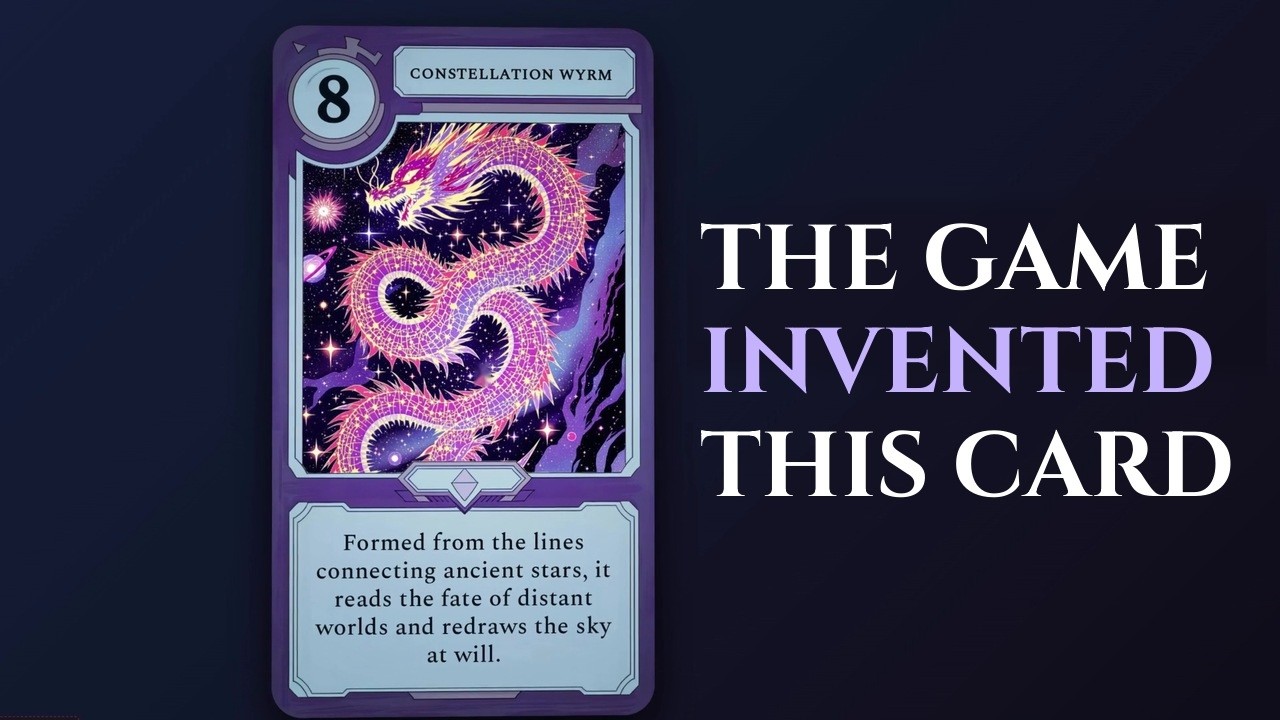
- Players add to the card pool. Fuse two of your creature cards in the Moon Foundry. If no one has fused that pair before, the game designs a new card, you pick its painting from four, and you are credited as its first discoverer.
Around the matches, you can sell copies of your Moon Foundry cards on the Moon Exchange once you have won ten matches, dream up a summoner and its spells in Moon Dream, find Stellar cards that move, and, with the Manga Pass, see a match drawn as manga. Tonight, the launch trailer above, shows most of this in 38 seconds, all recorded in the real game. In that sense Moonfall borrows from tabletop RPGs and from sandbox games as much as from other card games.
Hearthstone and Moonfall, side by side
If you know Hearthstone, here is the short version:
- Cards. Hearthstone: minions carry attack and health numbers. Moonfall: a card has a name, a mana cost and a line of text.
- Who decides what a play does. Hearthstone: the game applies the card's text. Moonfall: the AI Game Master reads the table, rules on the play and narrates it.
- Health. Hearthstone: heroes and minions both have health. Moonfall: only the two summoners have health, 25 each.
- Mana, hand and board. Both games grow your mana each turn up to a cap, and both limit your hand and your board. In Moonfall, mana grows to 10, and you hold up to 5 cards and keep up to 5 on the board.
- Commanding a creature. Hearthstone: you choose what a minion attacks. Moonfall: the Game Master offers three things the creature could do in that moment, and you choose one.
- New cards. Hearthstone: Blizzard adds them in expansions. Moonfall: players add them by fusing two creature cards.
- Where you play. Hearthstone: on PC, phones and tablets. Moonfall: in a browser on a computer, phone or tablet.
What will feel familiar
If you play other online card games, much of a match will look familiar:
- The mana curve. Your maximum mana grows by 1 each turn, up to 10, and refills at the start of every turn, so turn one is small and turn ten is large.
- Summon, then command. You summon a Character to the board for its mana cost and command it on later turns. Spells are one-time commands you cast from your hand.
- Dragging onto targets. To act, you drag a card onto its target: the enemy summoner, one of their creatures, a card in a hand, or a deck.
- Going first or second. The player who goes first starts with a smaller hand and less mana, and the player who goes second gets a little more of both.
- A collection to grow. You open card packs, spend Stardust, craft copies of cards and build decks from your Collection.
What will feel strange
- You read words, not numbers. A card that reads like a towering guardian will tend to shield your side, and a card that reads like a plague will tend to spread. The way a card is written shapes what it can do.
- The same card can land differently. A fire elemental sent at one small foe may simply burn it away; sent into a crowded board, its flames might catch several enemies at once.
- You choose an intent, not only a target. When you command a creature, the Game Master offers three things it could do right then, and you pick one.
- A misplay can cost the card. Cast a spell on an illegal target and you may lose the card and its mana for nothing, as you would at a table with a strict judge.
- A story runs beside the board. The Game Master narrates each ruling in the story next to the board, so the match is written down as you play it.
- Costs move. When decks with a card clearly win more often than they should, it costs one mana more; when they clearly lose more often, it costs one mana less. Only Multiplayer matches between two players count.
What you give up
Said plainly, these are the trades:
- Exact math. There is no stat line to add up, so you cannot work out the result of a turn before you play it.
- Predictable outcomes. The Game Master decides each play in context, so a line that worked last match may land differently this time.
- Speed. A play resolves once the Game Master has read the table and written the result, which takes a moment. The turn timer pauses while it does.
- Perfect rulings. The Game Master is an AI, so its rulings and stories can still be imperfect.
- A fixed card pool. Players keep adding cards and costs move with match results, so a deck can play differently from one week to the next. A card that is still too strong at 10 mana is banned from decks for 90 days.
Where to start
New to Moonfall? Start with how to play Moonfall, read why Moonfall has no health bars, see how the AI Game Master works, or learn how Moonfall balances its cards. What is an AI card game? explains the idea behind it, and the Moon Foundry guide explains fusing. Moonfall uses AI to tell its stories, to write and paint its new cards and to draw its manga, and AI output can still be imperfect. Ready for a match? Open Moonfall.
Hearthstone, Magic: The Gathering and the other game names on this page are trademarks of their respective owners. Moonfall is an independent game and is not affiliated with, endorsed or sponsored by them.
Frequently asked questions
Is Moonfall made by any of these studios?
No. Moonfall is an independent game. It is not affiliated with, endorsed or sponsored by any of the companies or games named on this page.
What kind of card game is Moonfall?
An online collectible card game played in the browser. You build a deck and play matches against friends or the AI, but an AI Game Master decides what each card does, and players add new cards by fusing two in the Moon Foundry.
Do Moonfall cards have attack and health numbers?
No. A Moonfall card has a name, a mana cost and a line of text. Only the two summoners have health, 25 each, and the AI Game Master decides what each card does in the moment.
What does Moonfall cost to play?
You can play the tutorial, practice matches and duels with friends without buying anything. Optional extras use Stardust, the in-game currency, which can also be bought, and the Manga Pass adds manga of your matches.