Moon Foundry
A Card Game for Infinite Craft Fans: Fuse Two Cards, Discover a New One
Enjoy Infinite Craft? In Moonfall you fuse two cards. If no one has fused that pair before, an AI designs a new card, and you are credited as its discoverer.
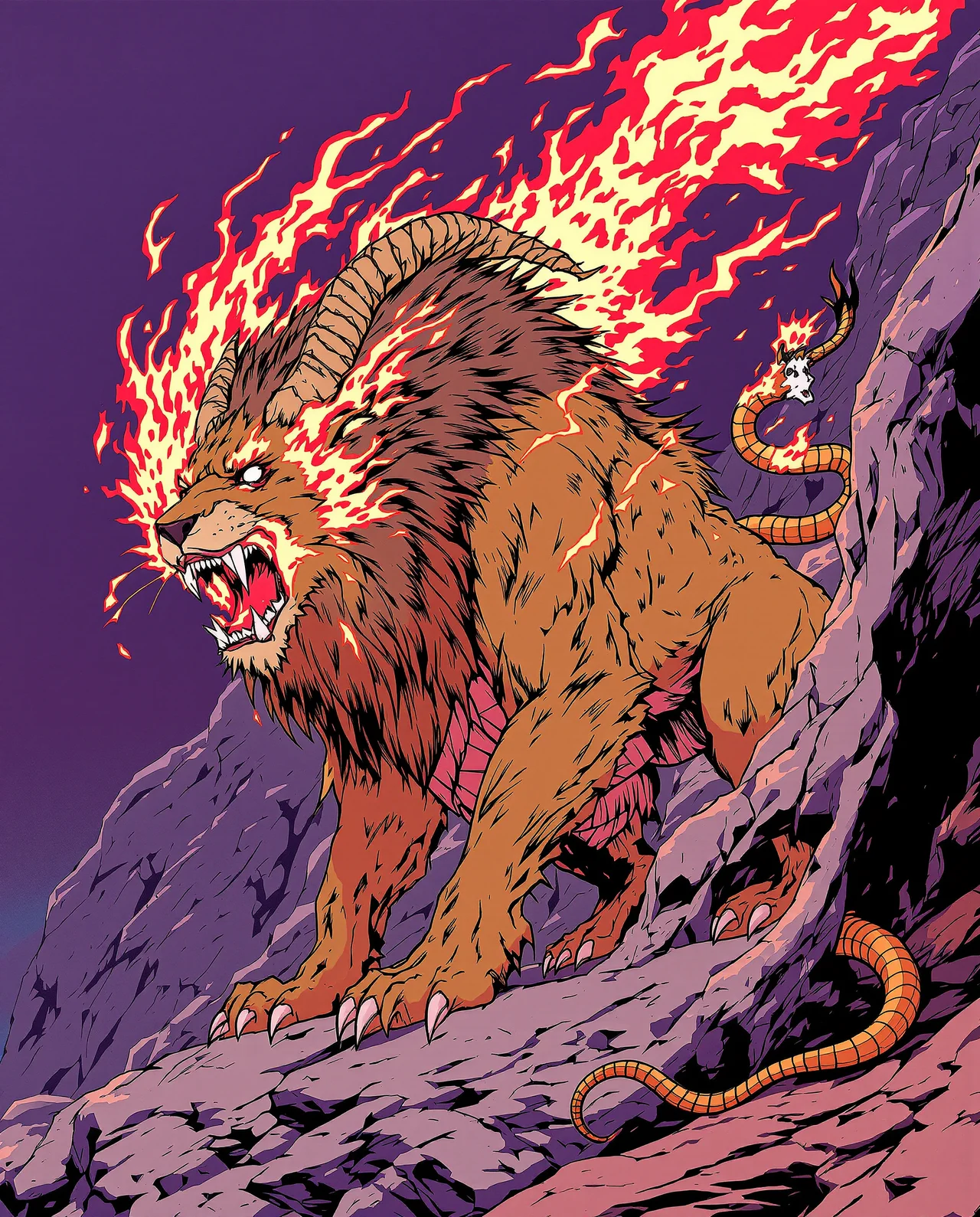
If you enjoy Infinite Craft, made by Neal Agarwal, you know the pull of putting two things together to see what comes out. Moonfall has that moment in its Moon Foundry. You drop one of your creature cards onto another, and if no one has fused that pair before, an AI designs a new card for it and you are credited as its first discoverer. What comes out is a card: you can play it in matches, fuse it again and sell copies to other players.
What the two have in common
- Two things make a third. Infinite Craft starts you with water, fire, wind and earth, and you combine pairs to make new elements. In Moonfall, you combine two of your creature cards.
- An AI decides the result. In Infinite Craft, a language model comes up with the new element the first time a pair is combined. In Moonfall, an AI card designer reads both parent cards as one idea and writes a new card, and an AI painter paints it.
- A pair has one answer. Infinite Craft keeps each result, so a pair gives every player the same element. In Moonfall, each pair's result is decided the first time anyone fuses it, and anyone who fuses that pair later learns its recipe and gets the same card.
- Being first counts. When you are the first player to make an element, Infinite Craft labels it a First Discovery. In Moonfall, the first player to fuse a pair is credited as the card's first discoverer, and the card carries their name.
What is different
- The result is a card. It has a name, a mana cost and a short description, and the game paints four versions of it. The discoverer picks the one it keeps, and from then on that is how the card looks to everyone.
- Only creatures fuse. Both parents are creature cards from your Collection, and a fusion always gives a creature. Spells come from elsewhere: Moon Dream dreams up a summoner and the spells it casts.
- You play what you make. A new card goes into your Collection, ready for a deck. In a match against a friend or the AI, an AI Game Master reads the table and decides what the card does.
- A card can go further. It is a creature like any other, so it can be one half of your next fusion. You can also craft extra copies, sell copies on the Moon Exchange once you have won ten matches, or craft a Stellar version, a living card that moves.
- Recipes stay with the players who know them. Other players do not see your recipes. A card's parents appear in your Collection only once you know its recipe, and buying a Moon Foundry card on the Moon Exchange teaches you its recipe.
- A discovery costs Stardust. You pay it whether you are the first to find the recipe or not, and the Moon Foundry shows the current price before you fuse. Fusing a pair you already know again costs no Stardust.
- It is for players 16 and older. You can try the tutorial before you sign in; fusing and matches need an account.
Infinite Craft and Moonfall, side by side
- What you combine. Infinite Craft: two elements, starting from water, fire, wind and earth. Moonfall: two of your creature cards.
- Who decides the result. Infinite Craft: a language model. Moonfall: an AI card designer writes the card and an AI painter paints it, and the discoverer picks one of four paintings.
- The same pair, later. Infinite Craft: the same element for every player. Moonfall: the same card for anyone who fuses it.
- Being first. Infinite Craft: a First Discovery label. Moonfall: first-discoverer credit, with your name on the card.
- What a result is for. Infinite Craft: more combining. Moonfall: decks and matches, more fusions, copies to sell and a Stellar version.
- Where you play. Infinite Craft: in a browser, and as apps for iOS and Android. Moonfall: in a browser on a computer, phone or tablet, with phones and tablets held sideways and nothing to download.
A real fusion: the horse and the log
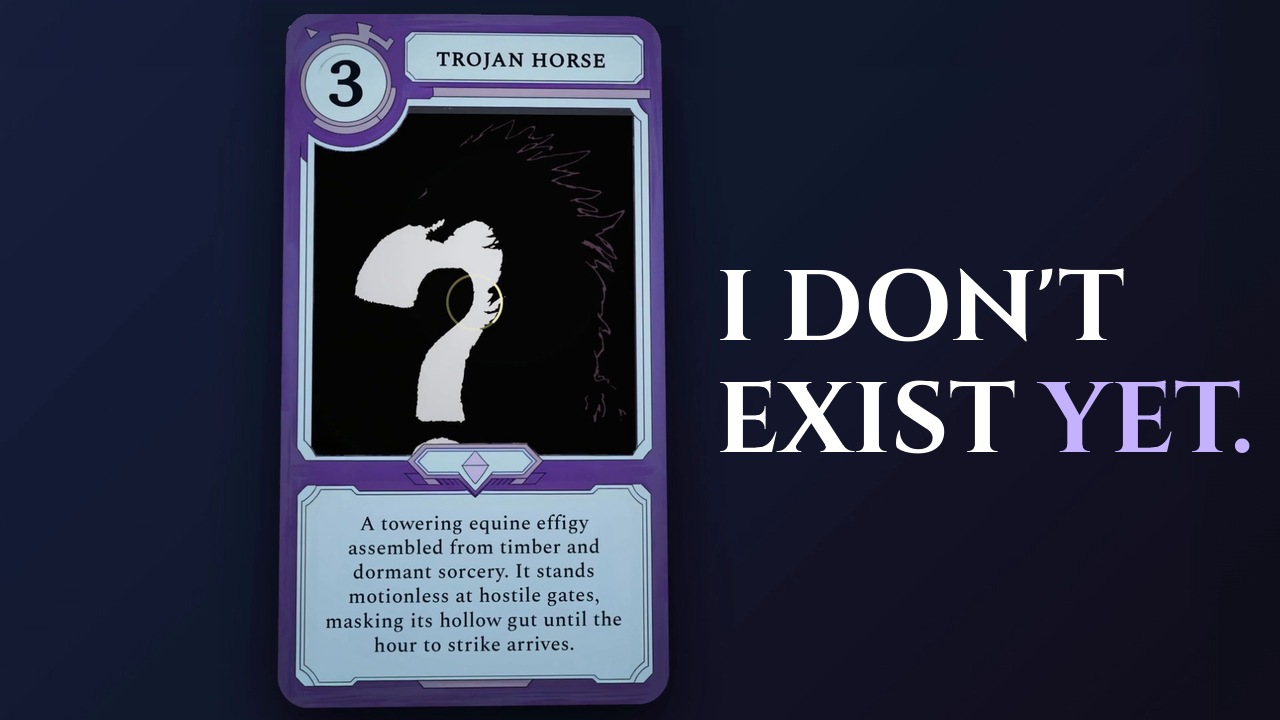
The film above, First Night, follows one fusion from start to finish. Mirebark Charger, “a hulking steed of twisted bark and blackened roots”, is fused with Enchanted Log, “a mundane log with a faint magical aura”. The AI card designer read the pair as one idea and wrote Trojan Horse, 3 mana: “a towering equine effigy assembled from timber and dormant sorcery”.
Then the new card goes through the rest of the loop:
- It gets a face. The game painted four versions of the Trojan Horse, and its discoverer picked one.
- It plays its first match. When it is commanded, the AI Game Master offers three moves: open the wooden belly, crush its target beneath timber, or spill the hidden cargo.
- It gets a name and a price. The card carries its discoverer's name, and it goes on the Moon Exchange at a price its discoverer chose.
The film was recorded outside the live game, and each pair's result is decided the first time anyone fuses it, so in your game the same two cards may give a different card. The First Night post tells the card's whole story, and can you fuse a pebble into a dragon? follows a longer chain, one fusion at a time.
Other combining games for Infinite Craft fans
If combining is the part you enjoy, these games do it in their own ways:
- Little Alchemy 2, by Recloak, in a browser and on iOS and Android: you mix items to build the world from scratch. Pick it if you want combining on its own, with no decks or matches.
- Doodle God, by JoyBits, on iOS and Android: you combine elements and watch a world grow from simple bacteria to whole civilizations. Pick it if you like a world that fills in as you discover.
- Sandboxels, by R74n, in a browser and on Steam: a falling-sand simulator whose elements react to heat, electricity and each other. Pick it if you would rather watch materials react than name new ones.
- Stacklands, by Sokpop Collective, on PC, Mac and Nintendo Switch: you stack cards to collect food, build structures and fight creatures. Pick it if you want to combine cards to build a village.
- Cultist Simulator, by Weather Factory, on PC, Mac, Linux, iOS, Android and Nintendo Switch: a narrative card game in a Lovecraftian world of the 1920s, in which you combine cards to tell your own story. Pick it if you want combining to tell a dark story.
Try a fusion
The Moon Foundry guide explains how the designer reads a pair, what is a sandbox card game? explains where new cards come from, and can you sell the cards you discover? covers the Moon Exchange. New cards are written and painted by AI, and AI output can still be imperfect. Ready to fuse? Open Moonfall.
Infinite Craft and the other game names on this page are trademarks of their respective owners. Moonfall is an independent game and is not affiliated with, endorsed or sponsored by them.
Frequently asked questions
Is Moonfall connected to Infinite Craft?
No. Moonfall is an independent game. It is not affiliated with Infinite Craft or its maker, and it is not endorsed or sponsored by them.
What does fusing cost in Moonfall?
Discovering a recipe costs Stardust, whether you are the first to find it or not. The Moon Foundry shows the current price before you fuse. Fusing a pair you already know again costs no Stardust.
Does the same pair always make the same card?
Yes, once it has been discovered. Each pair's result is decided the first time anyone fuses it, and anyone who fuses that pair later learns its recipe and gets the same card.
Can I play Moonfall on a phone?
Yes. Moonfall runs in the browser on a computer, phone or tablet, with nothing to download. On a phone or tablet, you hold it sideways.