Creation
Moon Dream — Conjure a Personalized Summoner
How Moon Dream works in Moonfall — turn a few words into a personalized summoner and full spell deck, then take them into battle.

These are illustrative examples captured when this article was prepared. Moon Dream is governed by the current price and transaction terms shown before confirmation.
The Moon Foundry lets you fuse two cards into a new creature. Moon Dream goes one step further: it lets you conjure a whole summoner — a playable character with their own face and their own spell deck — out of nothing but a few words. It's the most personal thing you can make in Moonfall, shaped by your idea and ready for your Collection. This guide covers what Moon Dream is, how to use it, and how to write a prompt worth dreaming on.
What Moon Dream makes
Open the Moon Foundry and you'll find two tools side by side: Moon Fuse and Moon Dream. Fuse combines existing cards. Dream starts from your imagination. You type a short prompt, and Moonfall generates:
- One summoner — a new playable character, complete with a portrait.
- A full spell deck — a set of spells built around a balanced mana curve, so the deck actually plays well rather than being a pile of random effects.
Both land straight in your Collection and Deck Manager, ready to take into a match like the other cards in your Collection.
How a run works
The flow is simple and deliberate:
- Write a prompt. A short phrase, letters and spaces only — a name or a concept, not a paragraph. Your prompt is the primary creative constraint; everything Moonfall generates bends toward it.
- Summoner stage. Spend the listed Stardust to create distinct portrait options from the same concept. The current price is shown before confirmation; otherwise this stage fails and its Stardust is refunded.
- Review the portraits. Mark the face you prefer while you compare the six options. This is only a local choice: nothing has been confirmed and no second charge occurs yet.
- Spell stage. Confirm one portrait to spend the listed Stardust and generate its spells. The current price is shown before confirmation. The chosen portrait grounds every spell's design and art, and the selection cannot be changed.
Abandoning or deleting a successful unselected draft leaves the first stage settled, so only that stage is charged. Retry and regeneration options are whatever the app currently offers. If the spell stage fails for a technical reason, its the listed Stardust is refunded and the confirmed summoner remains playable without generated spells.
When both stages finish, your summoner is a playable character in your Collection, and its spells are playable cards in your vault. The full two-stage total is shown before you start.
The important part visually is that Moon Dream spells are not loose illustrations. They enter the spell collection as card front entries, with cost, title, art, and text in the same frame as the rest of Moonfall.
One idea, many spells
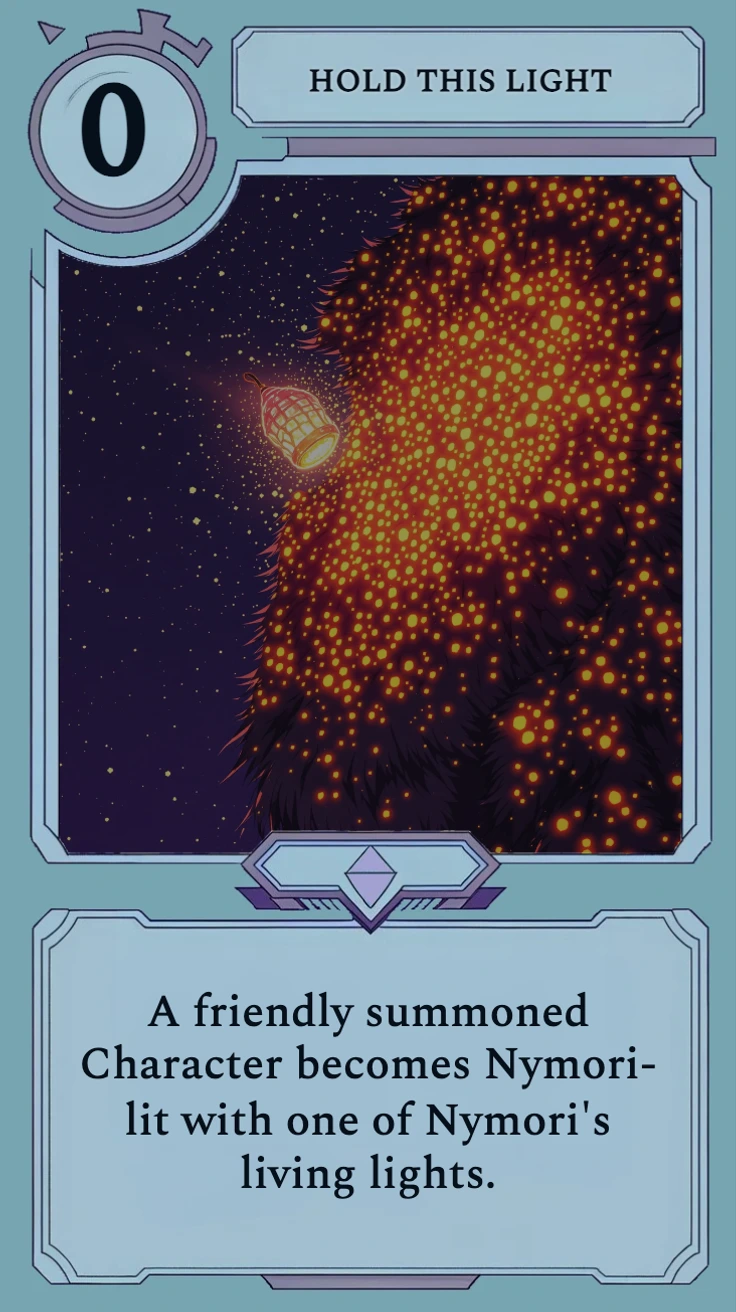
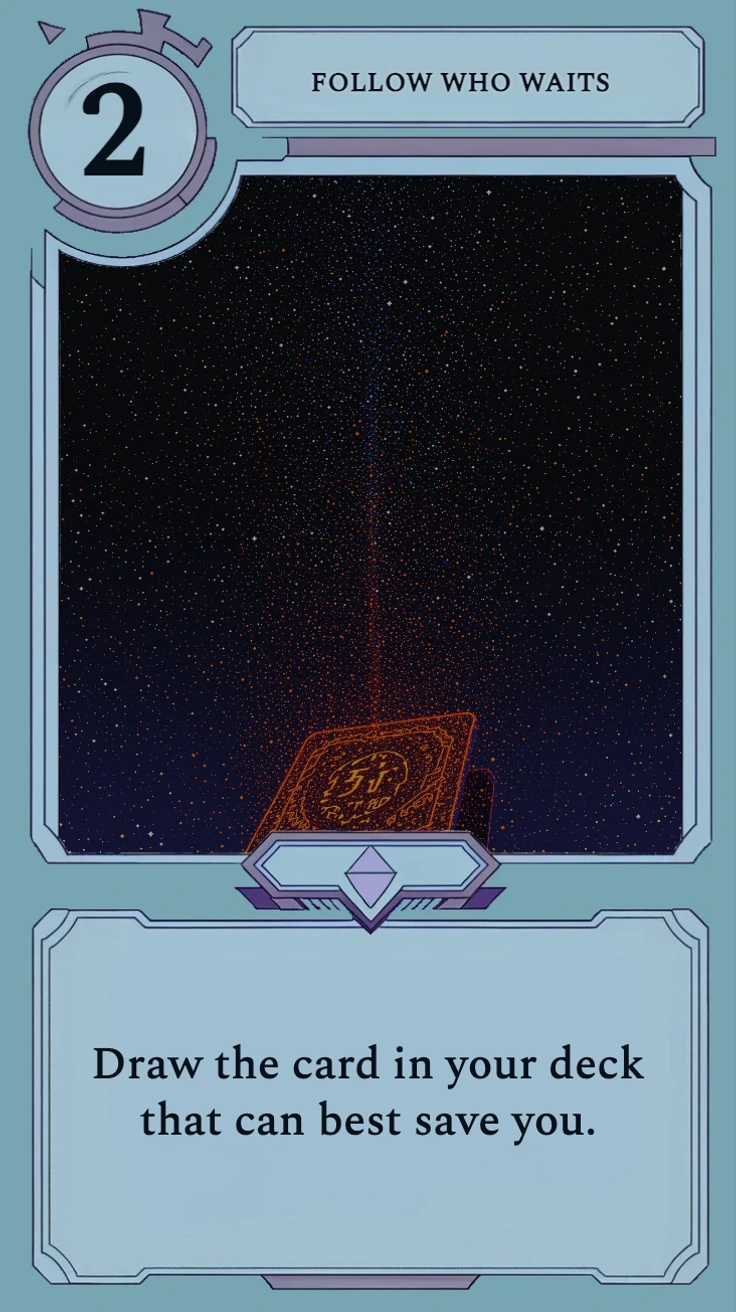
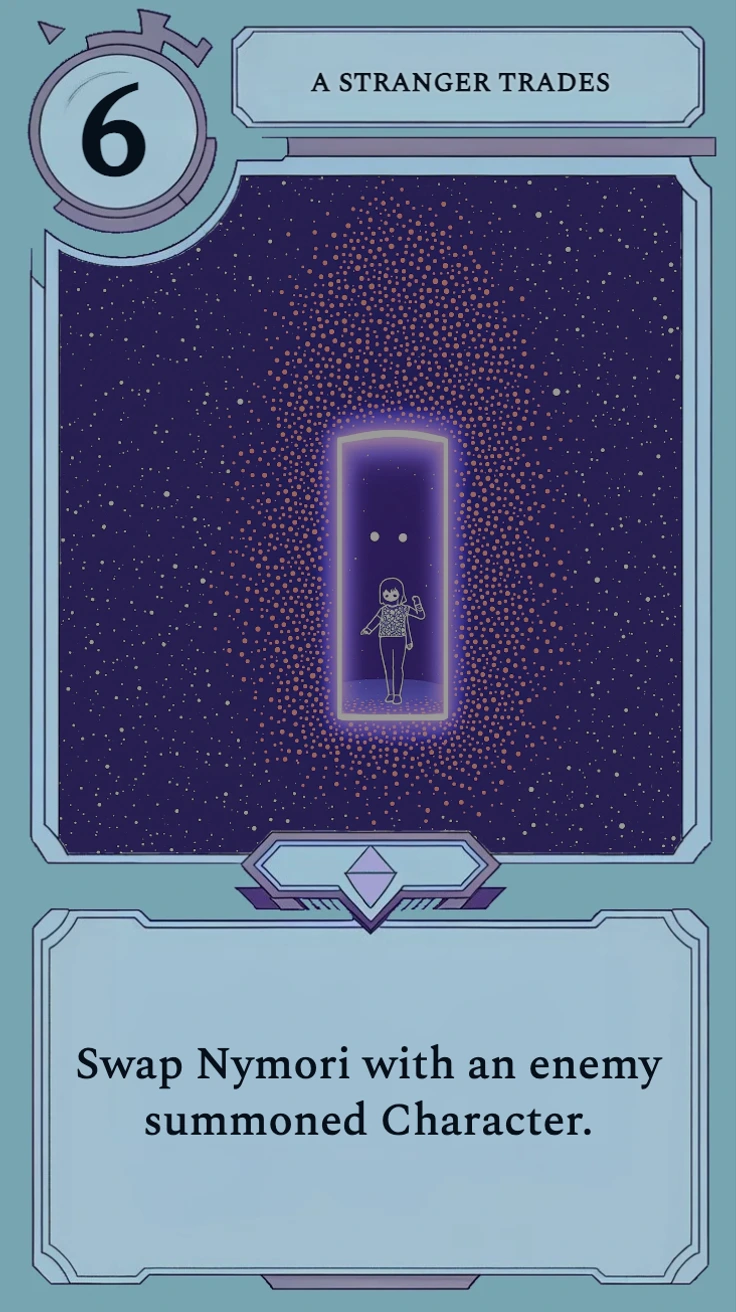
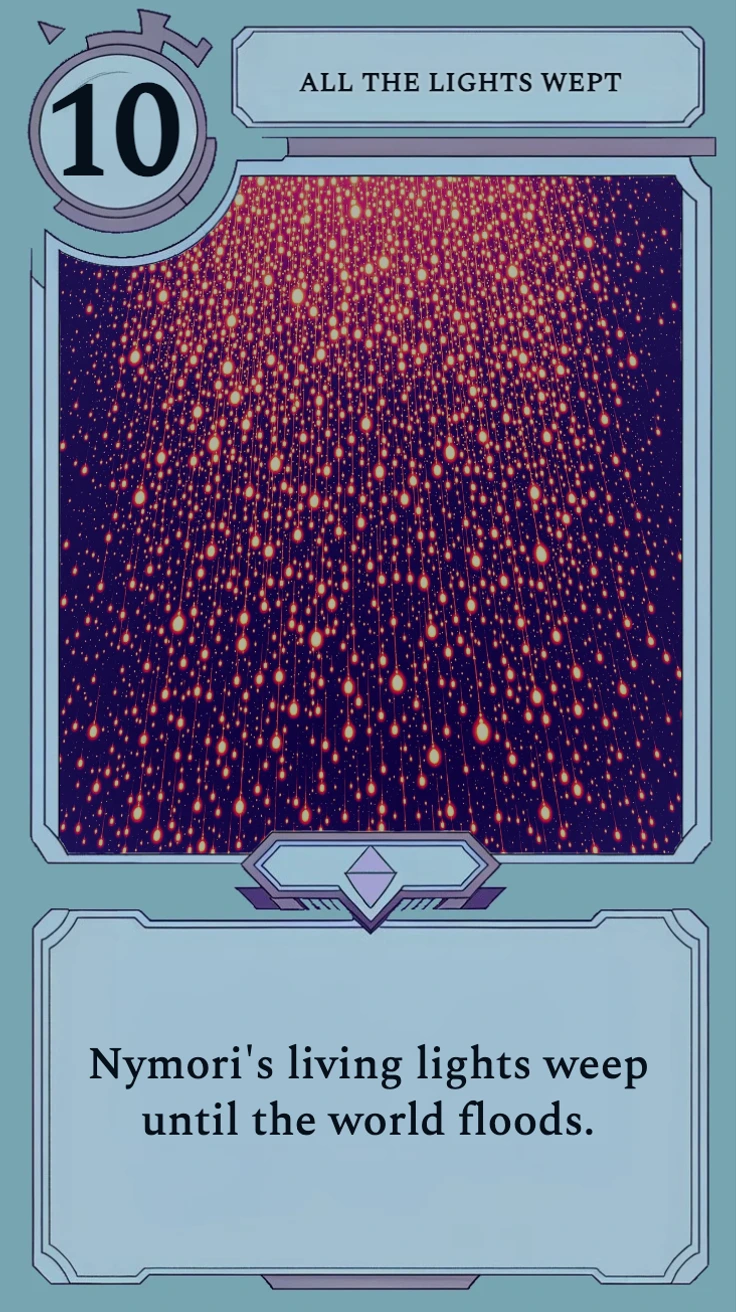
Nymori makes that range easy to see. Her collection starts by sharing a living light with one ally, asks the deck for the answer most likely to save you, trades the summoner's place with an enemy, and ends by flooding the world. Four effects with different jobs, but one unmistakable identity.
Hold This Light establishes the relationship between Nymori and her illuminated allies.
Follow Who Waits turns that gentle theme into a situational rescue.
A Stranger Trades uses the same identity for a dangerous positional swap.
All the Lights Wept carries it all the way to a world-changing finale.
Built for your collection
Moon Dream creations are added to your Collection and Deck Manager rather than listed in shared Foundry discovery or the Moon Exchange. That gives Dream a different role from Fuse, where forged cards join the shared pool.
As with other Moonfall content, the Terms and Privacy Policy apply.
Writing a good prompt
Because the prompt is short, every word carries weight. A few things help:
- Name a concept, not a sentence. "Moon Sage," "Ember Oracle," "Tidecaller" — an evocative handle gives Moonfall a clear center of gravity.
- Lean on tone words. A prompt that implies an element, a mood, or a role (guardian, trickster, warden) shapes both the summoner and the flavor of their spells.
- Trust the balance. You don't need to specify power levels. The spell deck is generated onto a sensible mana curve, so your job is the character, not the math.
Keep the idea original and focused. A distinct name, mood, and role give the summoner and its spell deck a stronger shared identity.
Remember the rules of the box — letters and spaces, a short budget — and let the rest be suggestion.
Taking your summoner to battle
A dreamed summoner plays by exactly the same rules as everyone else's. Its spells are cast like any spell; the AI Game Master reads their descriptions and resolves them in context, just as it does for the built-in cards. Because Moonfall has no attack or health numbers, a summoner you invented in five seconds can hold its own against the oldest legends in the game — what matters is how its spells read and how cleverly you play them.
And when the match ends, your dreamed summoner can star in the manga storybook like any other character — a story with a hero that literally didn't exist until you dreamed them up.
Moon Dream is Moonfall at its most personal: a few words in, a summoner out, and a deck shaped by your idea. Got a name in mind? Open Moonfall and dream one up.
Frequently asked questions
What is Moon Dream in Moonfall?
Moon Dream is a Moon Foundry workflow that turns a short written prompt into a personalized summoner and a full spell deck. The summoner and its spells go straight to your Collection and Deck Manager.
How is Moon Dream different from the Moon Foundry's Moon Fuse?
Moon Fuse combines two existing cards into a new Character card for the shared pool. Moon Dream instead conjures a summoner and matching spell deck for your Collection.
How much does a Moon Dream cost?
Moon Dream is paid in two stages. The summoner stage creates a set of distinct portraits. Confirming one starts the spell stage. The current price for each stage is shown before confirmation. A completed run costs total; stopping after the portraits costs only the settled first . Refund handling for a failed stage is shown in the app.
What can I write as a prompt?
A short phrase — a small character budget, letters and spaces only. Think of it as naming an original concept ("Moon Sage," "Frost Warden").
Where do Moon Dream summoners and spells appear?
They are added to your Collection and Deck Manager. Moon Dream creations are not listed in shared Foundry discovery or the Moon Exchange.