Under the hood
How Moonfall's AI Game Master Works
Inside the AI Game Master that reads every card in context, narrates the match, and rewards creativity over net-decking in Moonfall.
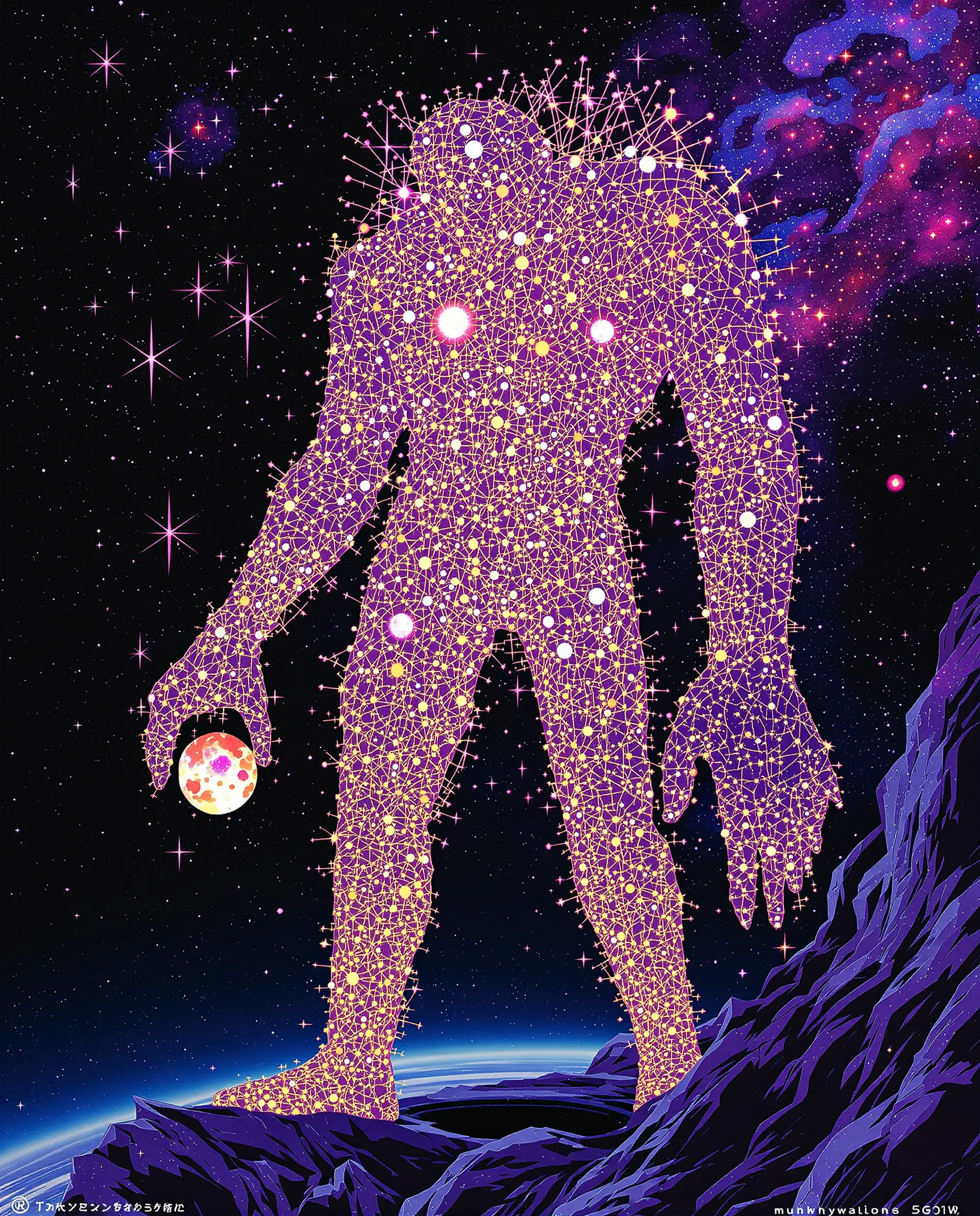
Every card game has a referee. Usually it's invisible — a rules engine buried in code that compares numbers and resolves interactions the same way every time. Moonfall pulls the referee into the light and gives it a mind. The AI Game Master is a language model that reads each card you play, decides what it does in the moment, updates the board, and narrates the result like a storyteller running a table. This is the piece that makes Moonfall an AI card game rather than a game with AI sprinkled on top.
Referee and storyteller at once
The Game Master wears two hats simultaneously. As a storyteller, it turns your plays into prose — the clash of your creatures, the taunt before a finishing blow, the way a spell warps the battlefield. As a game engine, it issues the actual state changes: this player loses health, that creature is frozen, this card moves to the discard pile. The narration and the mechanics are produced together, from the same reading of the moment, so the narration and the state change come from one reading of the same moment.
How it judges a card
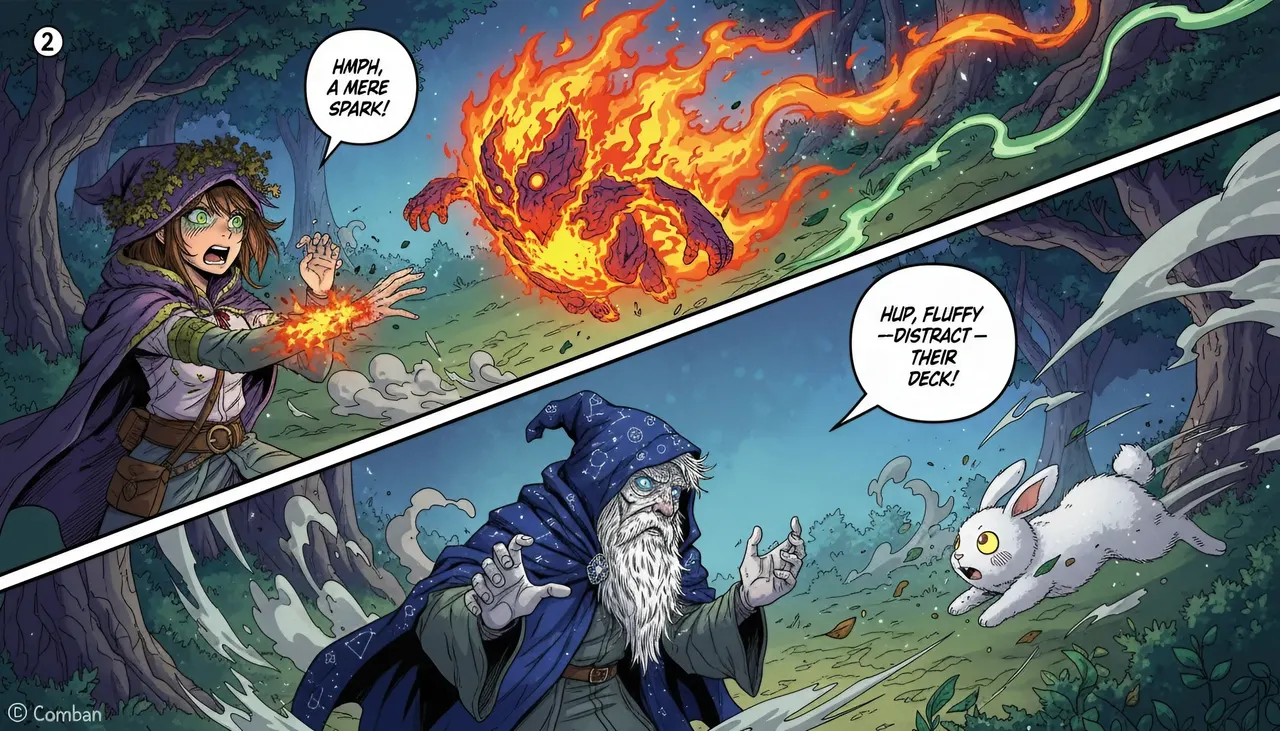
A Moonfall card is just a name, a mana cost, and a line of text — no attack, no health. So the Game Master's first job is to infer what a card is from how it's written. From the name and description it deduces characteristics like:
- Power — how hard it hits, and what it can overcome.
- Size — a giant aimed at one target may still catch the crowd around it.
- Durability — is this a tank, or something fragile?
- Speed and evasiveness — can it chase down a runner, or slip an attack?
- Intelligence, persuasion, loyalty, luck — and many more.
Then it weighs those traits against context: the state of both boards, the story so far, your opponent's position, the array of cards in play, and even the battle location, which can subtly tilt outcomes. The same card is not a constant. Command a fire elemental against a lone foe and it simply burns it; send it into a packed board and its flames may spread. None of that comes from a lookup table — the board is read as it stands.
Wording is everything
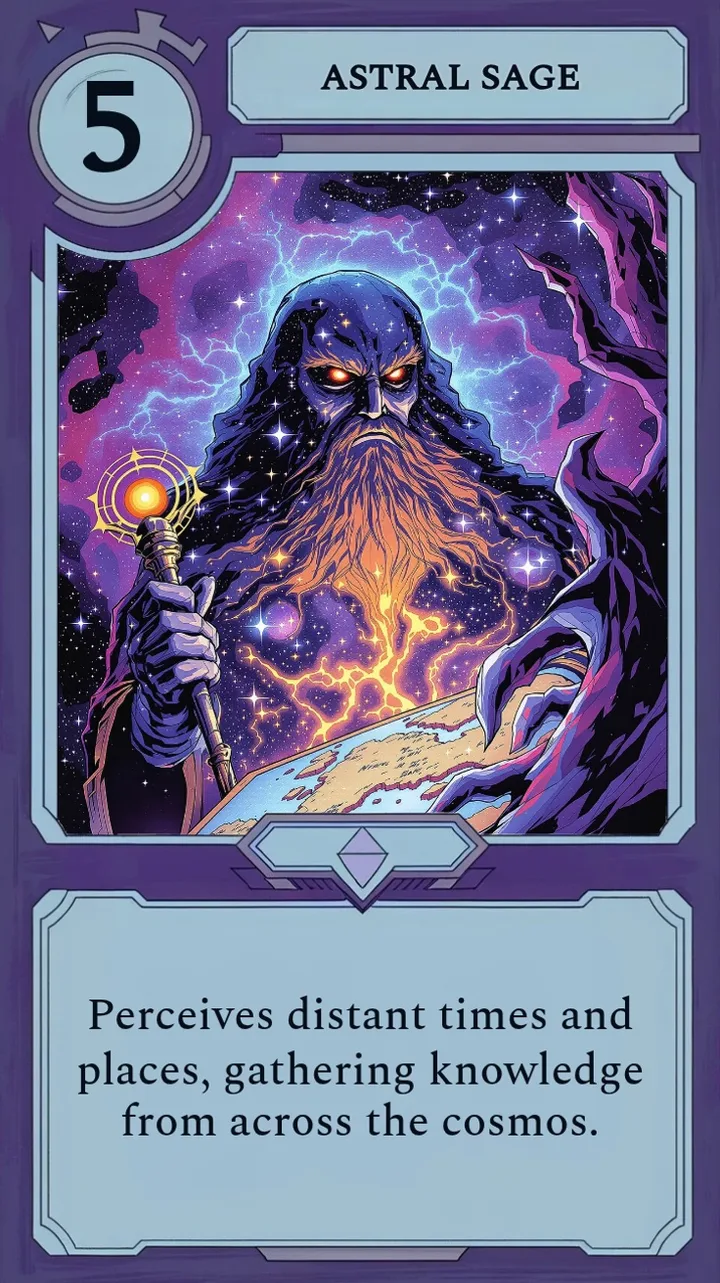
Because the model reads meaning, the words on a card carry real mechanical weight. A card described as a guardian will tend to interpose itself and protect your side, the way a "Taunt" works elsewhere — but it can also, wisely, choose not to block, anticipating your opponent's plan and saving itself for the threat that matters. A card that says its sage "perceives distant times and places" can genuinely reveal hidden information. A creature written as a swarm behaves like a swarm.
This extends to your plays. Characters are commanded by dragging them onto a target; the model decides what that command means. For deliberately powerful, high-cost characters it goes a step further and offers you a few tactical intents — strike, shield, control — so you disambiguate what your big play is trying to do, and it resolves accordingly. Spells are more precise commands: their own description is the instruction, resolved directly.
Fair, but firm
A thinking referee could sound exploitable, so Moonfall's Game Master works inside deliberate design limits. It's asked to keep the meta balanced — steering away from "win the game" effects, instant summoner kills, and game-breaking combos. Health, mana, turn structure, and a five-card board limit are design limits it works within, not around. And it punishes misplays: aim a spell at an illegal target and you may simply lose the card and its mana, exactly as a strict human judge would rule at a real table. You're free to be inventive; you're not free to cheat.
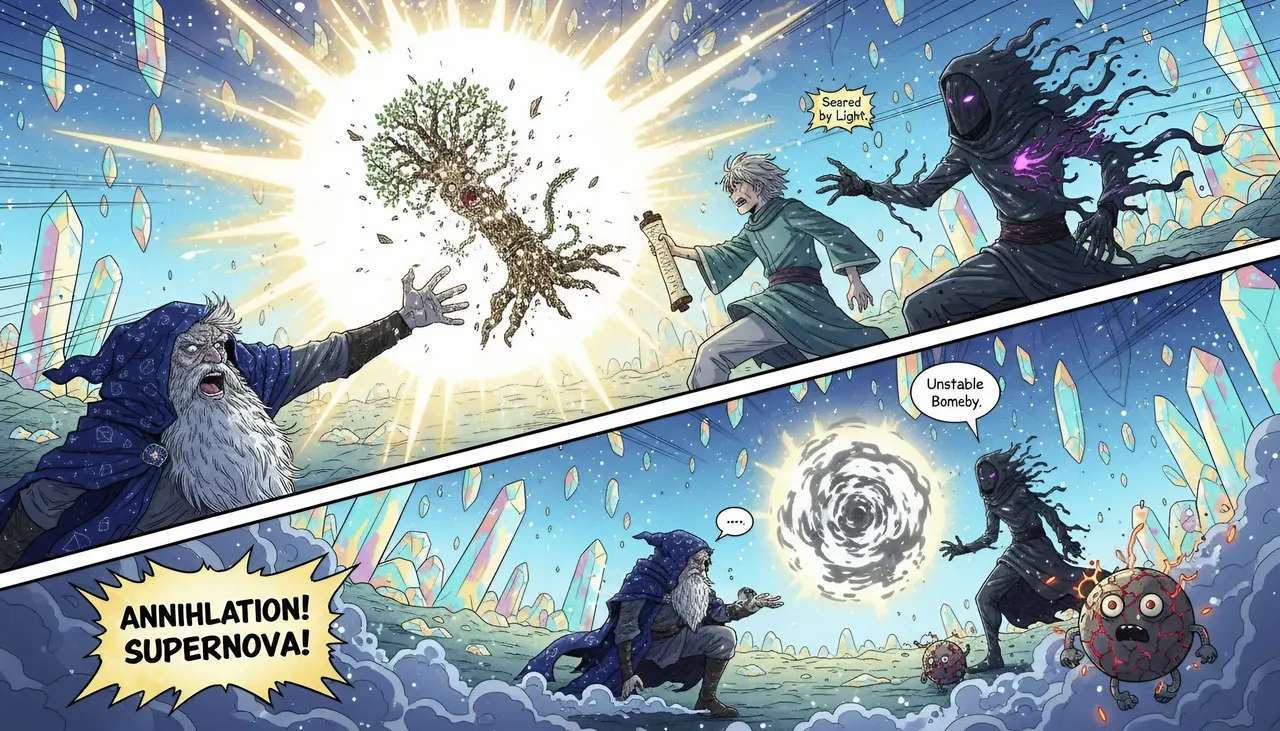
That full-match behavior is also why automated self-play is useful: it can surface confusing card text without turning the game into a spreadsheet.
Why creativity beats net-decking
In a traditional card game, the strongest deck is a solved problem. Someone computes the optimal list, publishes it, and everyone copies it — the "net-deck." The cards resolve identically for everyone, so the edge goes to whoever memorized the best sixty.
Moonfall breaks that loop. When a referee interprets your plays, there is no single solved line, because outcomes depend on wording, timing, and situation that no tier list can capture. A clever, well-motivated play that fits the story can beat the statistically "correct" one. Your imagination becomes the strongest card in your hand — and two players with the same deck can play completely different games.
The story is the receipt
There's one more thing the Game Master produces that no rules engine can: a record worth keeping. Because it narrates as it adjudicates, every match already exists as a story by the time it ends — and Moonfall inks that story into a shareable manga storybook. The finishing blow you set up three turns earlier isn't just a number in a log; it's a panel. The AI didn't only decide who won. It wrote how.
That's the AI Game Master: a referee that thinks, a storyteller that remembers, and the reason no two Moonfall matches ever play out the same. Want to see it read your cards? Play a match free, or start with how to play Moonfall.
Frequently asked questions
What is the AI Game Master in Moonfall?
The AI Game Master is the language model that runs every Moonfall match. It acts as both referee and storyteller — reading each card you play, deciding its effect in the current situation, updating the game state, and narrating the result. It replaces the fixed rules engine of a traditional card game.
How does the AI decide what a card does?
It reads the card's name and description and infers characteristics from them — power, size, durability, speed, evasiveness, and more — then weighs that against the board, the story so far, your opponent's position, and even the battle location. The effect is interpreted in context, not looked up in a table.
Can I break the game by writing a clever card or play?
You can be rewarded for cleverness, but not for cheating. The Game Master is instructed to keep matches balanced, to avoid instant-win effects, and to punish misplays — casting a spell on an illegal target can cost you the card and the mana for nothing. Creativity wins; exploits get judged.
Does the AI Game Master play against me?
Its main role is to adjudicate and narrate, not to be your opponent. You can face other players or practice against the AI, but in every match the Game Master's job is the same — to referee the cards fairly and tell the story of the duel.
Why does creativity beat net-decking in Moonfall?
Because a thinking referee resolves your plays, an inventive line that fits the situation can beat the statistically optimal one. There is no single solved deck to copy, since outcomes depend on wording, timing, and context that a tier list cannot capture.